

When Not to Claim Social Security: A Spokane Advisor’s View
Written by Noah Schwab, CFP®, a Spokane financial advisor
One of the most common questions I hear as a Spokane Financial Advisor is simple on the surface, but complex in practice:
“When should I take my Social Security?”
Most people know the basics. You can claim as early as 62. Full Retirement Age falls between 66 and 67. Waiting until 70 increases your benefit. But after years of working with retirees, I’ve found the better question is:
“When should I NOT take my Social Security?”
Claiming your Social Security benefits at the wrong time can reduce your income permanently and increase your taxes. The following are some of the most common times when it is better to wait on your Social Security benefits, particularly for Spokane retirees.
1. When You’re Still Working or Earning Income
If you claim Social Security before Full Retirement Age while still working, you may be subject to the earnings test, which temporarily withholds benefits if income exceeds annual limits.
While those benefits are eventually credited back, the bigger issue is that earned income can:
- Increase how much of your Social Security is taxable
- Reduce flexibility for tax planning
- Interfere with Roth conversion strategies
This often shows up when Social Security is layered on top of other income sources without a coordinated plan. I see this frequently alongside the issues discussed in Roth Conversion Strategies for Spokane Retirees.
2. When You’re in a Valuable Low-Tax Window
The years between retirement and Required Minimum Distributions (RMDs) are often the lowest-tax years of retirement. Claiming Social Security during this window can:
- Fill lower tax brackets prematurely
- Increase federal taxation of benefits
- Reduce the effectiveness of proactive planning
This is the same window many retirees use for the strategies discussed in "Reasons Not to Do a Roth Conversion," where timing, not just the strategy itself, matters most.
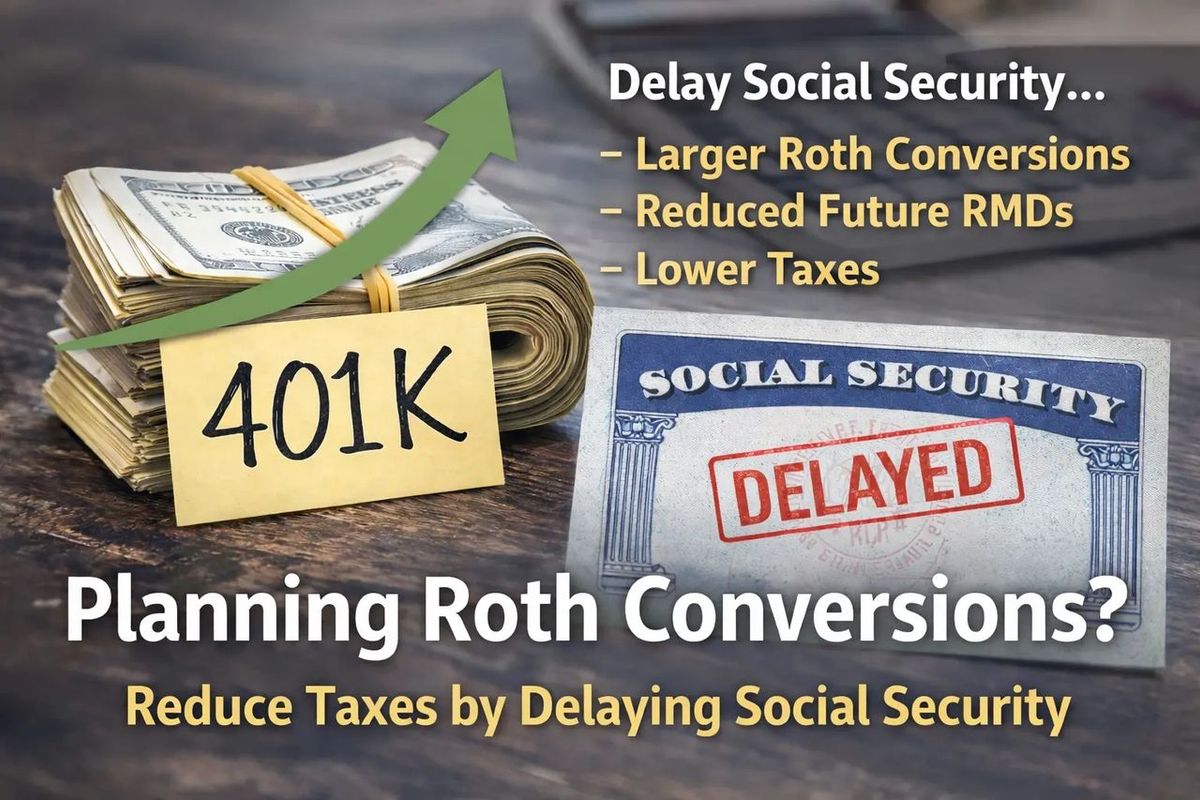
3. When You’re Planning Roth Conversions
Once Social Security benefits begin, they can trigger a cascading tax effect in which additional income makes more benefits taxable. This can significantly increase marginal tax rates and reduce the value of Roth conversions.
For Spokane retirees with large 401(k) balances, delaying Social Security often allows for:
- Larger Roth conversions at lower tax rates
- Reduced future RMDs
- Greater long-term tax control
This coordination is central to what I outline in Understanding QCDs: The Ultimate Guide for Retirees, where income timing directly affects charitable and tax strategies.
4. When Medicare IRMAA Is a Concern
Medicare premiums are based on income levels. If the Modified Adjusted Gross Income crosses certain thresholds, the IRMAA surcharges will add to the premiums for both Part B and Part D (in two years).
Adding Social Security income on top of:
- Roth conversions
- Pension income
- Capital gains
- IRA withdrawals
can unintentionally trigger higher Medicare premiums. This is a common issue I address in greater detail in IRMAA Explained by a Spokane Financial Advisor, where income coordination and tax planning software are critical.
5. When Longevity and Survivor Benefits Matter
Delaying Social Security increases benefits by roughly 8% per year between Full Retirement Age and age 70. For married couples, this often intersects with broader estate and survivor planning issues, especially when combined with strategies discussed in Washington State Estate Taxes Explained: Strategies from a Spokane Financial Advisor. Claiming early can permanently reduce protection for the surviving spouse.
One common mistake I see is when the working spouse delays to age 70, but the non-working spouse also delays claiming anything, even though they are past Full Retirement Age and eligible for their own benefit. In many cases, claiming the personal benefit earlier and switching later would provide more lifetime income. I'll go into greater detail in the real-world example below.

6. When You Have Other Income to Live On
If you have sufficient assets: IRAs, brokerage accounts, pensions, or cash reserves, claiming Social Security early often isn’t necessary.
In many cases, retirees who already understand Why Spokane Retirees Need Money in Different Tax Buckets are better positioned to delay Social Security while drawing from other sources first.
A Real-World Example: When Waiting Too Long Costs Guaranteed Income
As a Spokane Financial Advisor, I’ve seen retirees delay Social Security for sensible reasons, yet still miss important opportunities.
The Situation
This was a married couple nearing retirement:
- The wife was two years older than her husband (the main breadwinner)
- She was no longer working
- He continued working and planned to delay Social Security until age 70
- She had her own personal Social Security benefit
- Her spousal benefit would eventually be higher based on her husband's work history
Their plan was to wait and claim only the spousal benefit once he began Social Security.
What Was Missed
Because she had already reached Full Retirement Age, she could have:
- Started collecting her own personal benefit
- Received income for several years
- Switched to the higher spousal benefit later
Instead, she permanently forgoed years of guaranteed income, an issue that often arises when Social Security decisions are made separately from broader retirement planning. Claiming your personal Social Security benefit before Full Retirement Age can permanently reduce the spousal benefit you’re eligible for later, so timing matters.

Social Security FAQs for Spokane Retirees
Is Social Security taxed in Washington State?
Washington State does not tax Social Security benefits. However, federal taxation still applies. This often interacts with the tax-planning strategies discussed in "How Washington State Affects Taxes for Retirees."
Can I take my own benefit and later switch to a spousal benefit?
In many cases, yes. Particularly after Full Retirement Age, strategic sequencing is one of the most overlooked planning opportunities for married couples.
Can Social Security affect Medicare premiums?
Yes. Higher income can trigger IRMAA surcharges. This is why Social Security decisions should be coordinated with other strategies.
A Spokane Financial Advisor’s Final Thought
Social Security decisions don’t exist in a vacuum. They intersect with:
- Roth conversion planning
- Medicare premiums
- Required Minimum Distributions
- Estate and charitable strategies
Working with a Spokane Financial Advisor who understands how these pieces fit together can significantly improve retirement outcomes.
Sometimes, the smartest move isn’t claiming early, it’s knowing when not to.
Talk with our Spokane Financial Advisor team

About the Author
Noah Schwab, CFP® is a financial advisor in Spokane, Washington, helping retirees with $ 1M+ maximize their 401(k) with Roth conversions and tax strategies.
- No commissions or insurance
- Investment management, tax, and financial planning
Noah Schwab, CFP®, is a Spokane financial advisor specializing in helping retirees with tax-efficient retirement income strategies, Roth conversions, and estate planning. This article is for educational purposes only and should not be considered tax or legal advice.