

If you are a retiree in Spokane with taxable investment accounts, you may have heard of tax-loss harvesting but might not fully understand how it works. As a Spokane financial advisor and CFP®, I often see retirees miss opportunities to reduce taxes while keeping their retirement portfolio on track. In this article, I’ll explain the ins and outs of tax-loss harvesting, the benefits, what to watch out for, and how it can help your retirement savings go further.
What Is Tax-Loss Harvesting?
Tax-loss harvesting is a strategy where you sell investments in your taxable accounts that have declined in value to realize a capital loss. This loss can then offset capital gains from other investments.
If your losses exceed your gains, the IRS allows you to offset up to $3,000 of ordinary income per year ($1,500 if married filing separately). Any remaining losses can be carried forward indefinitely, giving you tax advantages in future years.
For Spokane retirees, this can be a valuable tool for managing taxable income, especially if you are receiving Social Security benefits or withdrawals from taxable accounts that could push you into higher tax brackets.
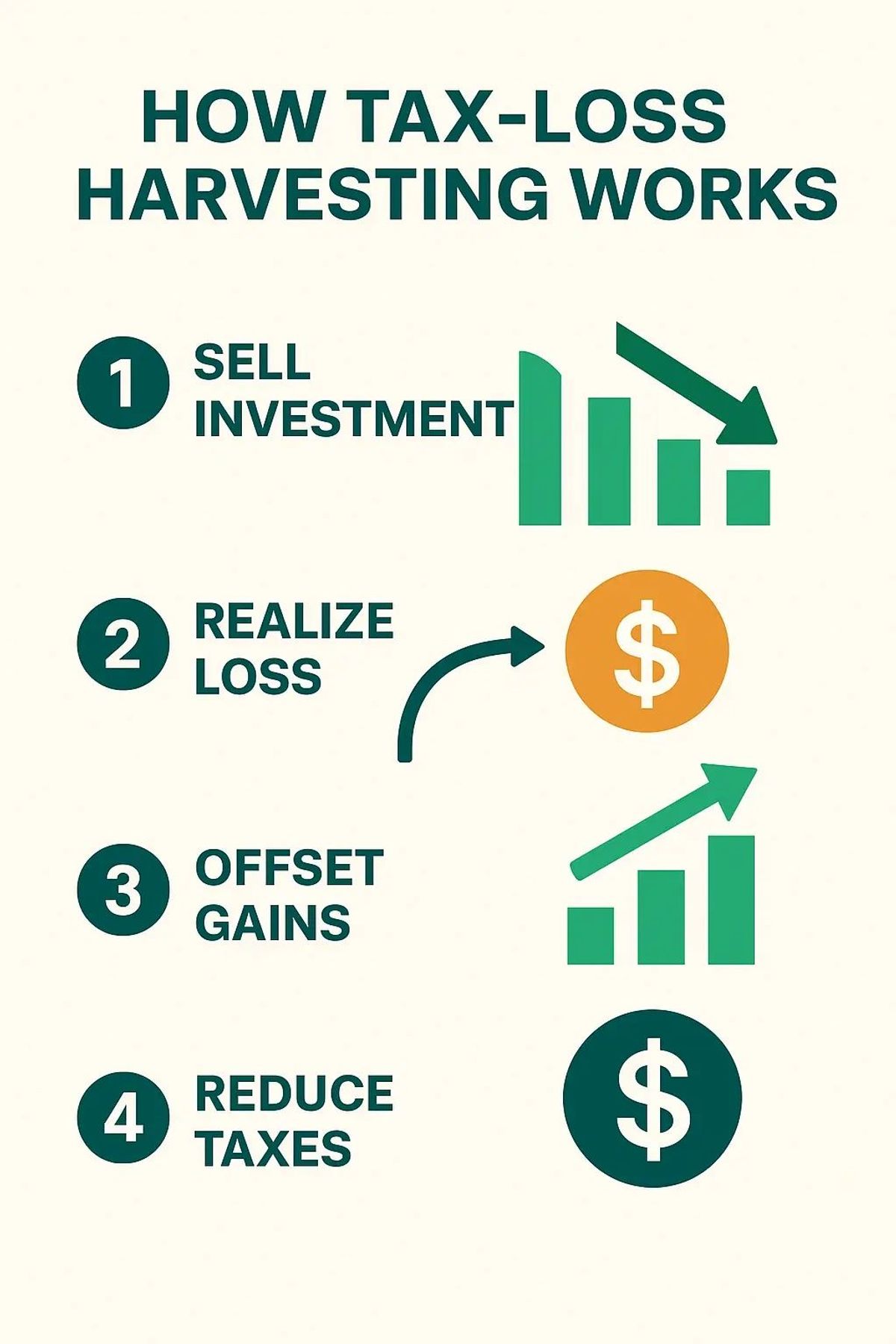
How Tax-Loss Harvesting Works
Here’s a simplified example for retirees:
- You own Stock A, which has dropped $10,000 in value.
- Earlier in the year, you sold Stock B and realized a $10,000 gain.
- Selling Stock A at a loss offsets the gain from Stock B, meaning you owe no capital gains taxes for that sale.
- If losses exceed gains, up to $3,000 can reduce your ordinary income, lowering your overall tax bill.
After selling the losing investment, you can reinvest the proceeds into a similar but not identical security to maintain your portfolio allocation. This keeps your investment strategy intact while taking advantage of tax savings.
Why Retirees in Spokane Should Consider Tax-Loss Harvesting
Reduce Taxes on Capital Gains
- Realized losses directly offset gains, lowering your taxable income. For retirees, this can mean paying less in capital gains taxes when selling investments to fund retirement expenses.
Offset Ordinary Income
- If losses exceed gains, you can reduce up to $3,000 of ordinary income per year. This can help retirees manage the tax impact on Social Security or other income sources.
Carry Forward Losses
- Unused losses can be carried forward to future years. This provides ongoing tax benefits, especially if your portfolio rebounds and generates future gains.
Rebalance Your Portfolio
- Tax-loss harvesting gives retirees a reason to rebalance investments without triggering extra taxes, keeping your portfolio aligned with your long-term goals.
Improve After-Tax Returns
- By reducing taxes, more of your money stays invested. This allows your retirement savings to grow more efficiently over time, which can be particularly valuable for Spokane retirees aiming to make their nest egg last.
Key Considerations for Spokane Retirees
Wash-Sale Rule
- The IRS wash-sale rule prevents you from claiming a loss if you purchase the same or “substantially identical” investment within 30 days before or after selling. To avoid this, you can reinvest in a similar but not identical fund or ETF.
Timing
- While year-end is popular for tax-loss harvesting, opportunities can arise anytime during the year. Regular portfolio monitoring helps you capture losses when they occur.
Align With Retirement Goals
- Tax-loss harvesting should support your retirement strategy, not dictate it. Avoid selling investments solely for tax purposes if it creates unnecessary risk or disrupts your long-term plan.
Who Benefits Most
- Retirees with taxable accounts, including brokerage accounts or inherited accounts.
- Those in higher tax brackets can offset gains to create meaningful tax savings.
- Retirees seeking to manage taxable income and Social Security taxation efficiently.
How a Spokane Financial Advisor Can Help
Working with a Spokane advisor near you ensures tax-loss harvesting is implemented correctly and in alignment with your retirement plan. A local advisor can:
- Review your portfolio for opportunities
- Help navigate the wash-sale rule and IRS regulations
- Coordinate tax-loss harvesting with other retirement strategies like Roth conversions or qualified charitable distributions (QCDs)
- Provide ongoing monitoring to maximize after-tax returns
Resources for Learning More
Key Takeaways for Spokane Retirees
- Tax-loss harvesting is a powerful strategy to manage taxes in retirement.
- It reduces capital gains, offsets ordinary income, and improves after-tax portfolio growth.
- Timing, compliance with the wash-sale rule, and alignment with retirement goals are critical.
- Working with a trusted Spokane financial advisor ensures tax-loss harvesting is done safely and effectively.
By strategically incorporating tax-loss harvesting into your retirement plan, you can keep more of your hard-earned money invested, reduce taxes, and create more flexibility in how you draw income from your portfolio. If you’re a Spokane retiree looking for guidance on this strategy, reach out to a Spokane advisor near you to ensure it fits seamlessly with your long-term financial goals.

About the Author
Noah Schwab CFP® is a financial advisor in Spokane, Washington, helping retirees with $ 1M+ maximize their 401(k) with Roth conversions and tax strategies.
- No commissions or insurance
- Investment management, tax and financial planning